
When Mobile Proxies Make More Sense Than Residential Proxies
Compare mobile proxies and residential proxies by trust signals, mobile-origin traffic patterns, workflow fit, and buying trade-offs before you choose a plan.

Compare mobile proxies and residential proxies by trust signals, mobile-origin traffic patterns, workflow fit, and buying trade-offs before you choose a plan.
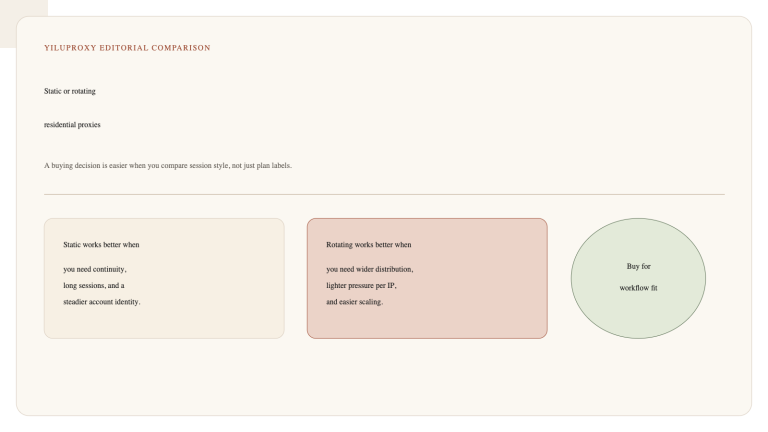
Compare static residential proxies and rotating residential proxies by session behavior, account stability, request distribution, and buying fit before you choose a plan.
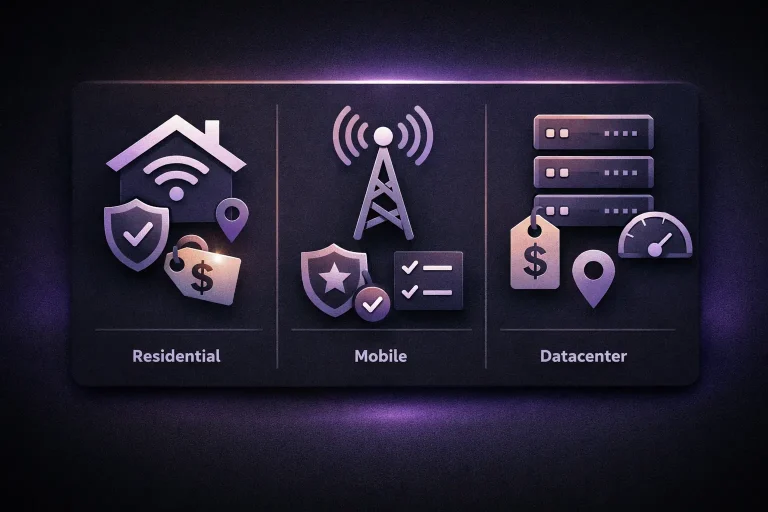
A practical Twitch proxies list for buyers who want to compare residential, mobile, and datacenter proxies, avoid common mistakes, and choose the right option by budget and use case.
A proxy is one of those internet tools people use every day—often without realizing it. If you’ve ever routed traffic through a different network to access region-locked content, tested a website from another country, protected your real IP on public Wi-Fi, or scaled automated requests safely, you’ve essentially relied on proxy-like behavior. At its simplest,…
TikTok growth isn’t only about content. At scale—multiple accounts, multiple regions, creator workflows, ad testing, and daily operations—network identity becomes part of the “stability budget.” A good TikTok residential IP can reduce friction and improve consistency signals, which often translates into fewer random logouts, fewer verification loops, and more predictable reach outcomes. But residential IPs…
Overseas dynamic IP proxies sound like the perfect shortcut: rotate exits, look more “distributed,” reduce blocks, and unlock more countries and cities on demand. In many real workflows, they do help—especially when your main goal is coverage. But “dynamic” is a double-edged sword. The same rotation that spreads risk can also create instability: higher latency…
Many people hear “SOCKS5 is faster,” and assume switching proxy types automatically boosts speed. The truth is more nuanced: SOCKS5 can be the easiest way to improve flexibility, and it can improve speed in the right conditions—but the main win is often lower overhead and broader protocol support, not magic latency reduction. SOCKS5 acts like…
“High-anonymous proxy” (often called an elite proxy) is marketed as the strongest option for hiding identity: no proxy headers, no obvious signals, and “better anonymity” than standard proxies. The marketing sounds simple—pay for “high anonymity,” and you’re safer. In practice, anonymity is not a single switch. Whether a high-anonymous proxy actually hides you better depends…
Residential proxies are often sold as the “safe default”: they look more like real users, so they should be more stable and get blocked less. Sometimes that’s true—especially for login-sensitive workflows and strict targets that distrust datacenter ranges. But many teams discover a counterintuitive outcome at scale: residential doesn’t automatically mean stable, and it definitely…
Fraud and account abuse rarely start with a dramatic takeover. More often, they begin as low-cost probing: credential stuffing, promo abuse, fake sign-ups, bot-driven scraping of user data, or “quiet” account testing to see what defenses trigger. If you only react after chargebacks or lockouts, you’re already paying the expensive version of the problem. IP…